
Inside the Polymer: How Smart Additives Transform Polypropylene
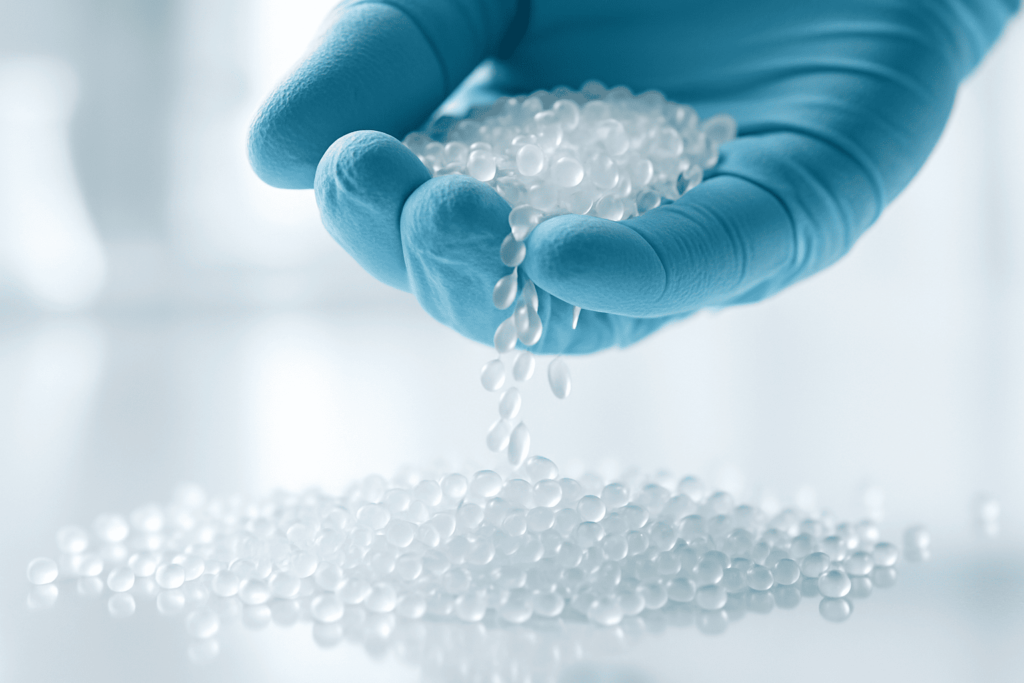
Polypropylene (PP) has become the backbone of modern industry – versatile, durable and cost-efficient. From automotive interiors to electronic housings and household goods, PP is everywhere. But there’s one issue engineers have wrestled with for decades – flammability.
That’s where the new generation of smart, halogen-free flame-retardant (FR) additives comes in. These additives turn ordinary PP into a fire-safe, compliant, and high-performance engineering polymer – without compromising mechanical strength or processing stability.
Why Polypropylene Needs Reinvention
Polypropylene’s structure (a long hydrocarbon chain) gives it strength and flexibility, but also makes it highly combustible. Its low limiting oxygen index (LOI) and tendency to drip when burning make it unsuitable for many regulated applications (like electronics or automotive interiors) unless modified.
Common Challenges in Raw PP:
- Low oxygen index (~18%)
- High dripping tendency during ignition
- Generation of black smoke and high heat release
- Fails UL94 V-2 and higher classifications
Types of Flame Retardant Systems for PP
Type of System | Typical Composition | Advantages | Limitations |
Halogenated (Legacy) | Brominated + ATO | Low dosage, effective | Toxic smoke, RoHS restricted, hazardous |
Mineral-Based | Magnesium hydroxide, ATH | Low toxicity | High loading (>60%) affects strength and lower polymer properties |
Intumescent (Modern) | Phosphorus–Nitrogen system | Low smoke, halogen-free, high efficiency, RoHS passed, Environmentally safest | Requires optimized dispersion |
🧩 SKMA’s HOFNIL® additives belong to the third category — the most advanced and sustainable FR system for polypropylene.
The HOFNIL® Difference: Clean Chemistry, Smart Engineering
SK Minerals & Additives Limited developed the HOFNIL® series – including HOFNIL-37A and HOFNIL-38C – as specialized intumescent flame retardants for PP and PE systems.
Mechanism of Action:
- Dehydration phase– releases inert gases to dilute oxygen.
- Char formation– creates a foamed, carbonaceous layer that insulates the surface.
- Barrier effect– reduces heat transfer and prevents dripping.
Property | HOFNIL-37A | HOFNIL-38C |
Recommended Use | PP, PE, HIPS, TPE | PP, PE, ABS |
FR Mechanism | Intumescent (P–N system) | Intumescent (P–N system) |
UL94 Rating | V-0 achievable at 29–35% loading | V-0 achievable at optimized dosage |
Smoke Emission | Very Low | Low |
RoHS / REACH | Compliant | Compliant |
Toxicity | Non-toxic, non-halogenated | Non-toxic, ATO-free |
Applications That Demand Proven Fire Safety
Industries that benefit from polypropylene FR technology:
- Automotive:dashboards, door trims, air ducts, and cable harnesses.
- Electrical & Electronics:connectors, appliance housings, and switchgear.
- Construction:profiles, pipes, and composite panels with improved LOI.
- Consumer Goods:small appliances, packaging, and home décor parts.
These applications demand not only compliance (UL94 V-0, RoHS, REACH) but also aesthetic and mechanical integrity – exactly where HOFNIL® additives excel.
Quick Facts
Parameter | Typical Result |
LOI (with HOFNIL®) | Up to 28–32% |
Smoke Density Reduction | 40–60% vs. halogenated FRs |
Thermal Decomposition (TGA) | Above 280°C |
Recommended Dosage | 25–35% (formulation dependent) |
Why Compounders Prefer HOFNIL®
- Halogen-Free & ATO-Free:Meets global green chemistry regulations.
- Processing Stability:Withstands extrusion and injection moulding temperatures.
- Optimized Dispersion:Fine particle size (~10–12 µm) ensures smooth compounding.
- Mechanical Retention:Maintains tensile and impact strength.
- Eco-Compliance:RoHS, REACH, and UL standards met across formulations.
The Future of Safer Polymers
Flame retardancy is no longer an afterthought – it’s a core design consideration in the age of sustainability and compliance.
With HOFNIL® polypropylene flame-retardant additives, SK Minerals & Additives Limited empowers compounders and manufacturers to engineer materials that are safer, smarter, and more sustainable – ready for the markets of tomorrow.
Because in the world of polymers, safety isn’t just a feature – it’s a responsibility.