
The Chemistry Behind Modern Flame Retardants: Phosphorus Meets Nitrogen
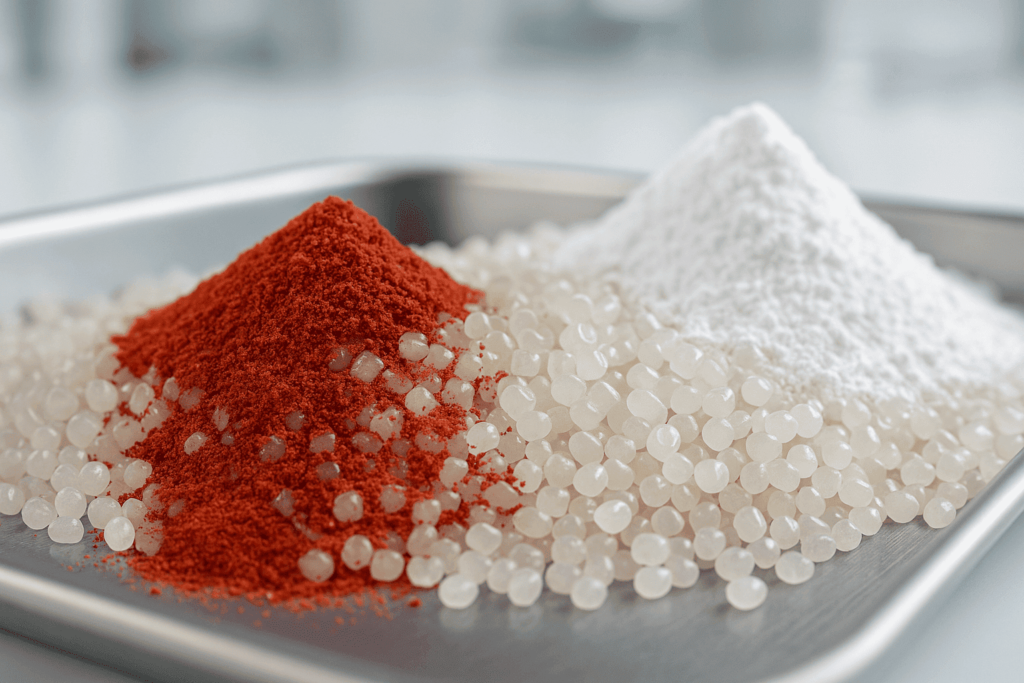
Flame retardant chemistry has come a long way from the early days of halogenated systems. As industries push for safer, greener and more globally compliant materials, a powerful combination has taken center stage: phosphorus and nitrogen. Together, they deliver flame retardant performance that is cleaner, more efficient and better aligned with modern regulations – making phosphorus nitrogen based flame retardants for plastics one of the most important innovations in polymer science today.
This synergy is not just a formulation trend; it is one of the most well-studied and scientifically validated systems for halogen-free flame retardancy worldwide.
Why Phosphorus + Nitrogen is a Breakthrough
Individually, both elements have flame-retardant properties. But when used together, something remarkable happens:
They reinforce each other’s performance, which results in strong char formation, reduced heat release and stable fire behaviour.
How phosphorus works:
- Promotes char formation
- Reduces flammable decomposition gases
- Forms protective phosphoric acid derivatives at high temperatures
How nitrogen works:
- Releases inert gases(N₂) that dilute oxygen
- Supports intumescent foaming
- Enhances char expansion and stability
Together, they create a self-sealing protective barrier that stops flame spread, reduces smoke and protects the underlying polymer.
A review published in Polymer Degradation and Stability (2022) found that combined P–N systems outperform traditional halogen-based systems in both smoke suppression and thermal stability, especially in polypropylene, polyamides and polyester formulations. (Source: ScienceDirect)
Why Industry Is Moving Toward P–N Systems
Global standards such as UL94, RoHS, REACH, EN45545 (railways) and IEC 60332 (cables) have accelerated the adoption of halogen-free flame retardants. P–N systems meet these requirements without releasing toxic halogen gases during combustion.
Key advantages for manufacturers:
- Halogen-free and environmentally safer
- Low smoke density
- No corrosive gas release
- Suitable for thin-wall components
- More stable during compounding and moulding
- Excellent compatibility with multiple polymers
These are critical benefits for sectors like automotive, electronics, wire & cable and appliances, where safety standards are strict and evolving quickly.
Where P-N Flame Retardants Perform Best
According to an IEEE study on fire-safe materials (2021), P–N systems exhibit excellent performance across a range of engineering plastics, especially those used in electrical and electronic applications.
Ideal polymer families for P–N systems:
- Polypropylene (PP)
- Polyethylene (PE)
- Polyamides (PA6/PA66)
- Polyesters (PBT/PET)
- TPE and elastomers
- HIPS and ABS
These combinations allow manufacturers to achieve UL94 V-0 ratings with stable mechanical and surface properties.
The SKMA Advantage – Science That Performs
SK Minerals & Additives Limited has invested years into optimizing phosphorus nitrogen-based flame retardants for plastics through its HOFNIL® portfolio. With a blend of intumescent technology, fine particle engineering and high thermal stability, HOFNIL® products deliver:
- Consistent char formation
- Lower smoke release
- Excellent dispersion and processing stability
- High CTI (Comparative Tracking Index) for electrical safety
- RoHS and REACH compliance
- Superior performance in both filled and unfilled polymer systems
Products like HOFNIL-37A, 38C, 63GA and 312A demonstrate how advanced P–N chemistry can elevate safety without compromising performance.
P-N Chemistry is the Future of Flame Retardancy
The combination of phosphorus and nitrogen represents the industry’s shift toward cleaner, safer and more sustainable flame-retardant systems. It allows polymer manufacturers to achieve global compliance as well as maintaining the mechanical integrity and processing flexibility needed for high-performance applications.
With cutting-edge solutions built on P–N innovation, SK Minerals & Additives Limited is empowering industries to design materials that protect both people and the planet.