India’s Infrastructure Boom Needs Safer Wiring – Here’s Why

India is building at a pace rarely seen before.
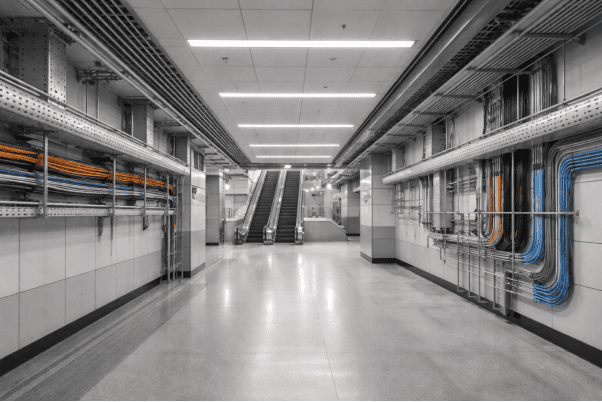
Metro lines stretch beneath cities, airports expand like living organisms, data centres rise quietly on city edges, and EV charging networks multiply overnight. Concrete, steel and glass usually get the credit for this transformation.

But there’s a quieter system holding it all together – wiring.

And when wiring fails, it doesn’t fail politely.

When Infrastructure Burns, It Rarely Starts with Flames

In most large-scale fire incidents, flames are not the first enemy. Smoke is.

Electrical cables, hidden behind walls, ceilings and panels, are often the first materials exposed to overheating, short circuits, or mechanical damage. When traditional cable insulation burns, it releases thick smoke, toxic gases and corrosive fumes – long before visible flames appear.

In enclosed spaces like:

  • Metro tunnels
  • Airports
  • Hospitals
  • IT parks
  • High-rise commercial buildings

Smoke spreads faster than people can react.

This is why modern infrastructure safety has shifted focus from “fire resistance” to “fire behaviour.”

Why Conventional Cable Materials Are No Longer Enough

For decades, PVC-based cables dominated the market. They were cost-effective, flexible and familiar. But they came with a hidden cost.

When exposed to fire, conventional halogenated cables can:

  • Release dense, opaque smoke
  • Emit toxic and corrosive gases
  • Damage electronic systems far from the fire source
  • Reduce evacuation visibility to near zero

In a digitally connected world, the damage caused by smoke and corrosion often exceeds the damage caused by the fire itself.

The Rise of Fire-Safe Wiring in India

India’s infrastructure standards are evolving. As projects become larger and more complex, safety expectations are no longer optional add-ons – they are part of the design brief.
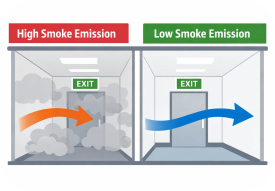
This shift has driven demand for low smoke zero halogen (LSZH) and HFFR cable systems, especially in public and mission-critical infrastructure.

At the heart of this shift are advanced additives developed by a wire & cable HFFR additives manufacturer focused on performance, compliance and long-term reliability.

This transition has accelerated the adoption of low smoke zero halogen flame retardants for cables, especially in public and mission-critical infrastructure.

What Makes HFFR Cable Systems Different

HFFR (Halogen-Free Flame Retardant) systems eliminate halogens entirely and rely on non-toxic chemistries to control fire behaviour.

Instead of aggressively suppressing flames, these systems:

  • Form protective char layers
  • Reduce heat release
  • Suppress smoke formation
  • Prevent toxic gas emissions

The result is a cable that behaves predictably under fire – giving people time, visibility and safer evacuation paths.

Traditional vs HFFR Cable Systems

Parameter

Conventional PVC Cables

HFFR / LSZH Cables

Smoke density

High

Very low

Toxic gas release

Significant

Minimal

Corrosive by-products

Yes

No

Visibility during fire

Poor

Improved

Suitability for public spaces

Limited

High

Regulatory alignment

Declining

Future-ready

This difference is why modern infrastructure specifications increasingly mandate halogen-free solutions.

Where Safer Wiring Is Becoming Non-Negotiable

HFFR cable systems are no longer niche. They are rapidly becoming standard across:

  • Metro rail and railway networks
  • Airports and underground terminals
  • Hospitals and healthcare facilities
  • Data centres and IT campuses
  • Commercial towers and smart buildings
  • EV charging and renewable energy infrastructure

In many of these environments, safety failures are not measured in downtime but in lives.

Additives: The Invisible Engineering Behind Safe Cables

While cables appear simple from the outside, their performance depends heavily on the additive systems within the insulation and sheathing layers.

Advanced HFFR additives are designed to balance:

  • Fire performance
  • Mechanical flexibility
  • Electrical insulation
  • Processing stability
  • Long-term ageing resistance

A capable wire & cable HFFR additives manufacturer understands that additives must work with polymer systems – not against them.

This is not about passing one test. It’s about behaving safely across years of service and unpredictable conditions.

These principles extend well beyond wiring, influencing the adoption of halogen-free flame retardants beyond cable insulation in engineering plastics used across electronics and appliances.

Why This Matters More Than Ever

India’s infrastructure boom is not slowing down. As cities grow vertically and systems grow denser, the margin for error shrinks.

Wiring that:

  • Produces minimal smoke
  • Emits no toxic gases
  • Protects equipment
  • Preserves visibility

is no longer a premium choice – it’s responsible engineering.

Building Quiet Safety into Loud Growth

Fire safety rarely makes headlines when it works. And that’s exactly the point.

The smartest infrastructure investments are the ones people never notice because nothing goes wrong.

As India builds faster, safer wiring will quietly determine how resilient, reliable and human-centric that growth truly is.

Advanced solutions such as HOFNIL halogen-free flame retardant additives play a critical role in enabling safer cable compounds that meet modern fire-safety and regulatory expectations.

Designing infrastructure for the future requires more than scale – it requires foresight.

Explore halogen-free additive solutions engineered to support safer, cleaner and more resilient wiring systems.