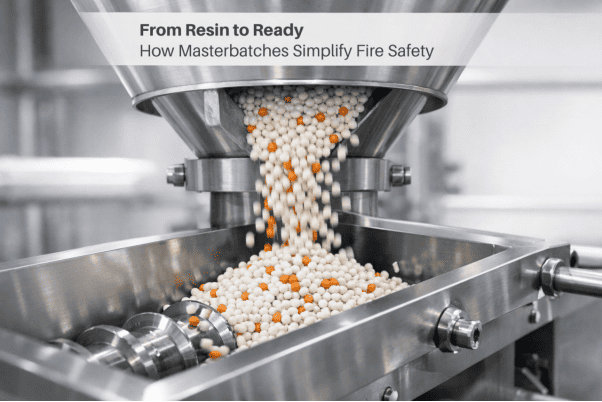
From Resin to Ready: How Masterbatches Simplify Fire Safety

n polymer compounding, fire safety is rarely about a single ingredient. It’s about balance – between performance, compliance, processability, and consistency. As flame-retardant requirements become more complex and global regulations stricter, manufacturers are increasingly looking for ways to simplify formulations without compromising safety. This is where flame retardant masterbatches have emerged as a practical and reliable solution.

Instead of handling multiple additives separately, masterbatches allow compounders to integrate fire protection directly into the polymer in a controlled and efficient way. And for many processors, this shift has transformed how fire-safe plastics are designed and produced.

What Is a Flame Retardant Masterbatch?

A flame retardant masterbatch is a pre-dispersed concentrate of flame-retardant additives incorporated into a compatible polymer carrier. It is designed to be easily let down into the base resin during extrusion or injection moulding.

Unlike direct powder dosing, masterbatches offer:

  • Better dispersion of flame-retardant additives
  • Reduced handling and dust exposure
  • Improved formulation consistency
  • Easier processing on the shop floor

For manufacturers aiming to meet fire safety standards repeatedly and reliably, masterbatches remove a significant layer of complexity.

Why Direct Additive Dosing Often Creates Challenges

While adding flame retardant powders directly into resin is possible, it comes with practical challenges – especially at scale.

Common issues include:

  • Inconsistent dispersion leading to variable fire performance
  • Dust generation and material loss
  • Poor surface finish or streaking
  • Processing instability at higher additive loadings
  • Greater dependence on operator skill

As production volumes increase and quality expectations tighten, these variables can quickly become bottlenecks.

How Masterbatches Simplify Fire-Safe Compounding

Masterbatches shift flame retardancy from an operational challenge to a formulation advantage.
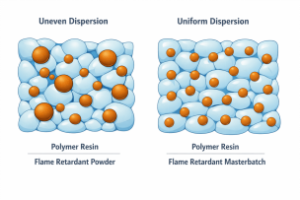
By using a masterbatch approach:

  • Flame retardant particles are already uniformly dispersed
  • Processing becomes more stable and repeatable
  • Quality variations between batches are minimized
  • Flame performance becomes easier to control and predict

For applications requiring halogen-free solutions, masterbatches also help maintain the delicate balance between fire safety, mechanical performance, and aesthetics.

This is why many processors now prefer working with a trusted halogen free FR masterbatch supplier rather than managing complex multi-additive systems internally.
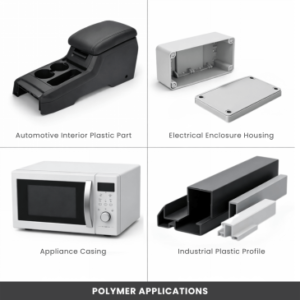
Where Halogen-Free FR Masterbatches Are Used

Halogen-free flame retardant masterbatches are widely used across polymer families and industries:

Polymer Systems

  • Polypropylene (PP)
  • Polyethylene (PE)
  • ABS and HIPS
  • Engineering plastics and blends

Application Areas

  • Automotive interior components
  • Electrical and electronic housings
  • Wire & cable accessories
  • Consumer appliances
  • Industrial enclosures and profiles

In these applications, masterbatches help manufacturers meet UL94, RoHS, and REACH requirements while maintaining consistent part quality.

What to Expect from a Reliable Halogen-Free FR Masterbatch Supplier

Not all masterbatches are created equal. A dependable supplier focuses on more than just fire performance.

Key factors include:

  • Consistent carrier resin compatibility
  • Stable thermal behavior during processing
  • Uniform additive dispersion
  • Low impact on mechanical properties
  • Compliance with global safety regulations

Equally important is technical support – helping processors select the right masterbatch for their resin system, processing method, and target fire rating.

Beyond Compliance: Why Masterbatches Are a Strategic Choice

Fire safety is no longer just a certification requirement; it’s part of product responsibility. Masterbatches allow manufacturers to design safer plastics with fewer variables, faster scale-up, and more predictable outcomes.

They reduce dependency on trial-and-error, shorten development cycles, and improve confidence in meeting both customer expectations and regulatory demands.

This broader shift toward non-halogen flame retardant systems in polymers reflects the industry’s focus on safer combustion behaviour, regulatory compliance, and long-term material reliability.

From Simplicity to Confidence

The move toward halogen-free materials has reshaped how flame retardancy is approached. Masterbatches represent the natural evolution of this shift – bringing simplicity, control, and reliability into fire-safe polymer design.

For manufacturers navigating increasingly complex safety standards, working with an experienced halogen free FR masterbatch supplier can make the difference between reactive compliance and confident engineering.

Looking to simplify fire safety without sacrificing performance or consistency?

Explore halogen-free masterbatch solutions designed to integrate seamlessly into modern polymer systems and production environments.