
The Science of Shelf Life: How Modern Bakeries Manage Freshness at Scale
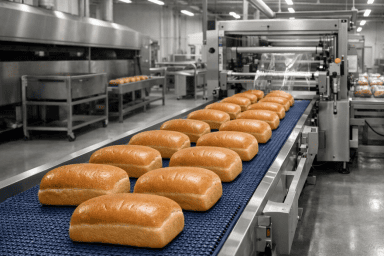
Walk into a bakery in the morning and it all looks effortless – warm bread, soft buns, perfect loaves lined up on shelves. But behind the scenes, freshness is far from simple. In a large-scale bakery, keeping baked goods safe, tasty and consistent over time is a careful science.
Freshness Isn’t Made – It’s Maintained
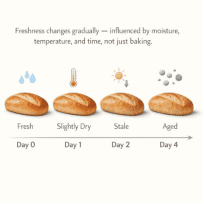
A loaf of bread starts changing the moment it comes out of the oven. Moisture moves within the loaf, starches firm up and small amounts of microbes can start to grow if conditions are right. These changes happen gradually, hour by hour, day by day. Unlike machines that fail suddenly, baked goods degrade slowly, which makes it harder to spot problems until it’s too late.
For industrial bakeries, this creates real challenges:
- Products must remain safe during transport, storage and on retail shelves.
- Shelf life needs to be predictable across different climates and regions.
- Quality must stay consistent across thousands of batches.
Freshness, in this context, is less about baking and more about control.
Why Shelf Life is a Technical Problem
Bakery products are particularly sensitive because they combine moisture, nutrients, and temperature – a perfect recipe for spoilage if not managed carefully.
Factor | Why It Matters |
Moisture | Encourages mould growth |
Temperature | Speeds up spoilage reactions |
Nutrients | Provide an ideal environment for bacteria and fungi |
Even under controlled conditions, problems like mould, bacterial growth (often called rope), and texture changes can appear quickly. At scale, these aren’t minor issues—they can lead to product returns, brand reputation damage, and compliance risks.
Preservatives: Safety You Can Trust
Preservatives aren’t added just to prolong shelf life – they protect food from unsafe conditions. In bakery applications, the most trusted solution is calcium propionate. It slows down mould growth and keeps bread soft without changing taste or interfering with the baking process.
Why Calcium Propionate Works
- Inhibits mould and bacterial spoilage effectively at low levels.
- Stable under baking temperatures.
- Neutral on flavour and aroma.
- Compatible with various bakery formulations.
A reliable source from a calcium propionate manufacturer in India means that every batch behaves predictably, keeping products safe and consistent.
Quality Matters More Than Quantity
All preservatives are not made the same. Even small variations in particle size, purity, or moisture content can affect performance. Poor-quality preservatives can cause uneven shelf life, spoilage, and inconsistent texture. High-quality calcium propionate allows:
- Uniform mixing in dough
- Predictable shelf life
- Compliance with food safety regulations
- Consistency across production batches
Scaling Freshness Across Distance
Baked goods often travel long distances to reach consumers. Transport, storage, and retail display conditions vary. Preservatives help bridge this gap, so that what leaves the bakery arrives fresh and safe.
The Invisible Work Behind Every Fresh Loaf
Consumers rarely notice preservatives and that’s the point. When products stay fresh, safe, and tasty, no one questions why. But behind every successful loaf is a carefully designed preservation system, quietly doing its job.
Freshness isn’t a coincidence – it’s engineered.
Explore food-grade preservative solutions that deliver consistent safety and quality for modern bakeries.