
Why a Simple Preservative Plays a Critical Role in Food Safety
In food manufacturing, the most important ingredients are rarely the most visible ones.
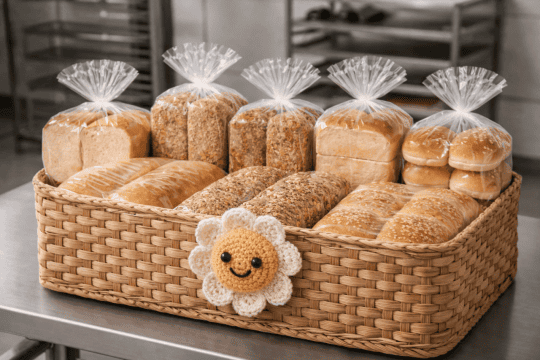
Consumers notice texture. They remember taste. They judge freshness with their eyes. But behind every loaf of bread that stays soft on day three, every bun that doesn’t smell “off” on day five and every packaged bakery product that travels hundreds of kilometres without incident – there is a quiet chemical decision at work.
That decision is preservation.
And sometimes, it comes down to something deceptively simple.
Food Safety is a Time Problem
Food doesn’t fail dramatically. It deteriorates quietly.
Mould doesn’t announce itself on day one. Spoilage doesn’t wait for permission. Microbial growth happens in the background – affected by moisture, temperature, packaging and time.
For bakeries and food manufacturers, the challenge is not just producing food that tastes good on the production line. It’s producing food that remains safe, stable and compliant throughout its entire shelf life.
This is where preservatives step in – not as additives of convenience, but as controls of risk.
The Misunderstood Role of Preservatives
Preservatives often suffer from a branding problem. They’re seen as optional. Or worse, as shortcuts.
In reality, preservatives exist because food systems are biologically active. Flour carries spores. Air carries microbes. Water enables growth. And once baked goods cool, they become ideal environments for mould if left unprotected.
The role of a preservative is not to extend shelf life unnaturally – but to prevent unsafe conditions from developing.
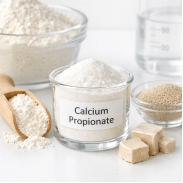
And few preservatives have earned their place as quietly and consistently as calcium propionate.
This reflects the broader role of additives in industrial safety and quality, where carefully selected materials quietly support performance across sectors.
Why Calcium Propionate Became a Bakery Standard
Calcium propionate is widely used in bakery products because it does one job exceptionally well:
it inhibits mould growth without interfering with fermentation or flavour.
Unlike more aggressive chemical preservatives, calcium propionate:
- Targets mould and rope bacteria
- Works effectively at low inclusion levels
- Remains stable under baking temperatures
- Does not alter taste, texture, or aroma
- Is widely accepted under global food regulations
It operates in the background unnoticed by consumers, but essential to safety
Preservation Without Compromise
Modern bakeries operate under tight constraints:
- Clean-label expectations
- Consistent product quality
- Longer distribution chains
- Regulatory scrutiny
- Zero tolerance for spoilage
A preservative must therefore do more than “work.” It must integrate seamlessly into production.
Requirement | Why It Matters |
Controlled mould inhibition | Prevents spoilage |
Process stability | Compatible with baking conditions |
Sensory neutrality | No impact on taste |
Regulatory acceptance | FSSAI & global compliance |
Consistent quality | Batch-to-batch reliability |
This is why sourcing matters just as much as formulation.
Quality is Not Optional in Food Additives
In food applications, variability is risk.
An inconsistent preservative can lead to uneven shelf life, unpredictable spoilage, or regulatory non-compliance. That’s why manufacturers look beyond price and focus on reliability.
Working with the best calcium propionate supplier in India is not a procurement decision – it’s a quality assurance strategy.
It ensures:
- Consistent particle size and purity
- Predictable performance in formulations
- Compliance with food safety standards
- Confidence across production batches
When preservatives perform quietly and consistently, everyone benefits – manufacturers, retailers and consumers alike.
The Invisible Backbone of Food Safety
Consumers rarely thank preservatives. They rarely notice them. And that’s exactly how it should be.
The most successful food safety interventions are the ones that prevent problems before they arise – without changing the eating experience.
Calcium propionate doesn’t extend shelf life to impress.
It extends safety to protect.
Food Safety is a Design Choice
Just like fire safety in materials or durability in plastics, food safety begins long before the product reaches the shelf. It begins at the formulation stage – with informed, responsible choices.
A simple preservative, chosen correctly and supplied reliably, becomes a powerful safeguard in a complex food ecosystem.
Quiet Chemistry, Real Responsibility
In the end, food safety is not about dramatic interventions. It’s about consistency. Control. Care.
And sometimes, it’s about trusting a small, well-understood molecule to do a very important job – day after day, batch after batch.
Safe food doesn’t happen by accident.
Explore food-grade preservative solutions designed for consistency, compliance and confidence across modern bakery applications.