
How Fire Safety Requirements are Redefining Engineering Plastics
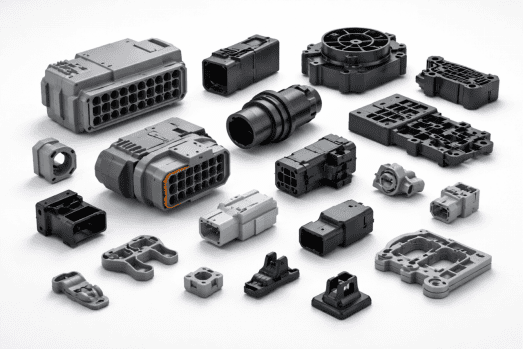
There was a time when engineering plastics were judged by a simple checklist: strength, durability, heat resistance and cost. If a material could survive mechanical stress and pass processing trials, it earned its place on the production line.
Fire safety was often treated as a late-stage requirement – something to “add on” once the part design was finalized.
That era is over.
Today, fire safety is no longer an optional checkbox. It’s an essential design driver. And it’s quietly reshaping how engineering plastics are formulated, selected and used across various industries.
When Fire Safety Moved Up the Design Table
As products became smaller, denser and more powerful, and the use of plastics outgrew metal in many industries, plastics found themselves closer to heat sources than ever before. Electronics grew compact and lighter due to plastics. Automotive systems became electrically complex. Appliances packed more functionality into tighter spaces.
At the same time, fire safety regulations evolved.
Standards such as UL94, IEC, RoHS and REACH began focusing not just on flame resistance, but on:
- Smoke density
- Toxicity of combustion gases
- Long-term material behaviour
- Environmental impact
Engineering plastics could no longer afford to “burn quietly” or rely on legacy halogenated systems.
Why Traditional Flame Retardants Fell Short
Halogen-based flame retardants delivered quick results in the lab. They suppressed flames efficiently. But in real-world scenarios, they came with side effects that modern regulations could no longer ignore.
These included:
- Dense, opaque smoke
- Corrosive gases damaging electronics
- Environmental and disposal concerns
- Regulatory restrictions across global markets
For industries exporting globally, the risk wasn’t just safety – it was market access.
The Rise of Halogen-Free Engineering Plastics
To meet evolving requirements, manufacturers turned to halogen-free FR for engineering plastics – systems designed to manage fire behaviour without compromising human safety or regulatory compliance.
Instead of interfering with flames in the gas phase, halogen-free systems work within the material itself:
- Promoting char formation
- Reducing heat release
- Limiting smoke generation
- Avoiding toxic by-products
Fire safety became something plastics did, not something added after the fact.
Much of this transition is driven by the effectiveness of phosphorus-nitrogen based flame retardants for plastics, which enable fire safety without the drawbacks of traditional halogenated systems.
Engineering Plastics Under the New Fire-Safety Lens
Modern engineering plastics are now expected to perform across multiple dimensions simultaneously.
Requirement | What It Means Today |
Fire performance | UL94 V-0 with low smoke |
Mechanical strength | No brittleness after FR addition |
Thermal stability | Performance under continuous heat |
Processability | Stable moulding and extrusion |
Compliance | RoHS, REACH, global OEM norms |
Meeting one requirement in isolation is no longer enough. Materials must perform as systems.
Where Fire-Safe Engineering Plastics Are Critical
The shift is most visible in applications where failure is not an option:
Electronics & Electrical Housings
Compact designs, higher power densities and stricter safety expectations have made flame retardants for electronics and electrical housings essential, not optional.
Automotive Components
Interior trims, connectors, sensor housings and battery-adjacent parts must meet both mechanical and fire safety standards, often simultaneously.
Appliances & Consumer Electronics
From washing machines to power tools, engineering plastics must resist heat, mechanical stress and fire exposure without degrading over time.
The Additive Balancing Act
Introducing flame retardancy into engineering plastics is not about increasing additive loading – it’s about formulation intelligence.
Halogen-free systems are often paired with:
- Impact modifiers to retain toughness
- Processing stabilizers for thermal control
- Synergists to fine-tune fire performance
The goal is balance: a material that passes fire tests and survives real-world use.
This is where formulation expertise becomes more valuable than raw chemistry.
In many cases, this balance is achieved by pairing flame retardants with impact modifiers in halogen-free engineering plastics, ensuring toughness and durability are not sacrificed for compliance.
Why This Shift is Permanent
Fire safety requirements are not easing. If anything, they are becoming more stringent as infrastructure grows denser and products become more complex.
Engineering plastics that fail to adapt will:
- Lose regulatory approval
- Face restricted applications
- Fall out of global supply chains
Those that evolve – integrating halogen-free fire safety at the design stage – will define the next generation of products.
Designing Plastics for the Way the World Actually Works
Fire safety today is not about worst-case scenarios in a lab. It’s about:
- How materials behave in confined spaces
- How smoke affects evacuation
- How components age over time
- How products are disposed of responsibly
Engineering plastics are no longer passive materials. They are active participants in safety design.
The Quiet Redefinition of Engineering Plastics
Most people will never notice the material inside a connector housing or appliance casing. And that’s exactly the point.
When engineering plastics do their job well, nothing happens. No smoke. No panic. No failure.
As fire safety requirements continue to evolve, plastics that combine performance, compliance and responsibility will quietly become the new standard.
Advanced solutions such as HOFNIL halogen-free flame-retardant additives support engineering plastics that meet modern fire safety standards while maintaining mechanical and processing performance.
Designing safer products starts with smarter material choices.
Explore halogen-free flame-retardant solutions engineered to meet modern fire safety requirements – without compromising performance.
FAQs
- Q: Why are fire safety requirements becoming stricter for engineering plastics?
A:Fire safety standards are evolving due to increased use of plastics near heat sources, compact product designs, and greater focus on smoke toxicity, environmental impact and human safety. - Q: What are halogen-free flame retardants in engineering plastics?
A:Halogen-free flame retardants are additive systems that improve fire performance without releasing toxic or corrosive gases, making them safer and more environmentally compliant than traditional halogenated solutions. - Q: How do halogen-free flame retardants work in engineering plastics?
A:These systems typically work in the condensed phase by forming a protective char layer, reducing heat release, limiting oxygen access and suppressing smoke during combustion. - Q: Which applications require halogen-free flame retardants the most?
A:Electronics housings, automotive components, appliances, connectors and industrial enclosures rely heavily on halogen-free flame retardants due to strict fire safety and regulatory requirements. - Q: Do halogen-free flame retardants affect mechanical properties?
A:When properly formulated, halogen-free systems can maintain mechanical strength. Impact modifiers and synergists are often used to balance toughness and fire performance. - Q: Why are phosphorus-nitrogen flame retardants used in engineering plastics?
A:Phosphorus-nitrogen systems promote char formation and reduce smoke, making them highly effective, non-toxic and compatible with modern fire safety standards. - Q: Are halogen-free flame retardants compliant with global regulations?
A:Yes. Most halogen-free flame-retardant systems are designed to comply with RoHS, REACH, UL94, and other international safety and environmental regulations. - Q: How do HOFNIL flame-retardant additives support engineering plastics?
A:HOFNIL halogen-free flame-retardant additives are engineered to meet modern fire safety requirements while supporting mechanical performance and processing stability in engineering plastics.