
Beyond the Basics: Understanding the Versatility of Magnesium Oxide in Industry
Some materials only do one thing and do it well. Magnesium oxide or MgO isn’t one of them.
It quietly shows up in different industries, taking on multiple roles – from keeping furnaces hot to making plastics stronger, from helping soil retain nutrients to insulating electrical components. It’s the kind of material you might not notice, but once you need it, you can’t imagine working without it.
Why MgO Stands Out
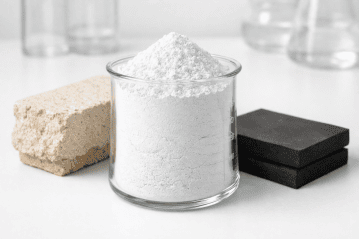
At first glance, magnesium oxide looks simple: a fine white powder. But don’t be fooled – its simplicity is deceptive. MgO is versatile because it brings together a unique combination of properties:
- Heat resistance:it withstands high temperatures without breaking down
- Alkalinity:it balances acids and stabilises chemical reactions
- Insulation:it can resist electrical conduction where needed
- Absorption ability:it can capture moisture or impurities in industrial systems
These qualities let MgO adapt to different challenges across industries.
Where Magnesium Oxide Shines
MgO is everywhere you’d least expect:
1. Refractories and Steel
It’s the backbone of furnaces, kilns and crucibles. MgO can handle extreme heat without breaking down, making it ideal for heavy-duty industrial processes.
2. Rubber and Plastics
In polymers, it helps stabilise materials, control acidity and improve durability – without changing the final product’s appearance or performance.
3. Electrical and Electronics
Used in insulation and heating elements, MgO resists heat and prevents unwanted electrical conduction – a rare combination.
4. Agriculture
MgO is added to soil or animal feed to supplement magnesium, helping crops grow better and livestock stay healthy.
5. Environmental Applications
From neutralising acidic waste to controlling pH in water treatment, MgO quietly protects systems we rely on every day.
Not All MgO Is the Same
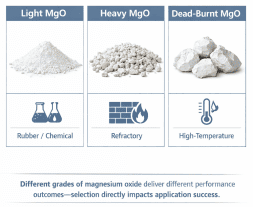
MgO’s performance depends on its grade, purity and how it’s processed. Choosing the wrong type can affect the final result. Here’s a simple breakdown:
Type | Characteristics | Typical Use |
Light MgO | Fine, highly reactive | Rubber, chemicals |
Heavy MgO | Dense, less reactive | Refractories |
Dead-burnt MgO | Extremely stable | High-temperature applications |
Type | Characteristics | Typical Use |
Light MgO | Fine, highly reactive | Rubber, chemicals |
Heavy MgO | Dense, less reactive | Refractories |
Dead-burnt MgO | Extremely stable | High-temperature applications |
Selecting the right type isn’t a minor detail – it’s a critical decision that affects safety, performance and consistency.
Why Sourcing Matters
Even the best MgO can underperform if it’s inconsistent. Impurities, uneven particle size, or unstable batches can reduce effectiveness, especially in large-scale industrial operations.
Working with a reliable industrial magnesium oxide manufacturer in India ensures quality and consistency, so every batch performs as expected, whether it’s in a steel plant, a polymer factory, or a food-grade application.
The Quiet Power of Magnesium Oxide
MgO isn’t flashy. It doesn’t make headlines. But its versatility, reliability and adaptability make it indispensable in modern industry. From high-heat operations to everyday products, magnesium oxide quietly supports performance behind the scenes.
Sometimes, the most valuable materials are the ones that don’t ask for attention – they just deliver, consistently and quietly.
Discover high-performance magnesium oxide solutions built for reliability, versatility and industrial success across applications.
It’s the backbone of furnaces, kilns and crucibles. MgO can handle extreme heat without breaking down, making it ideal for heavy-duty industrial processes.